Autumn Edit · Skin Clarity

Pigmentation spots and melasma treatment in Almere

An even skin starts with understanding pigmentation. Sunlight, hormones or earlier inflammation: every spot has its own cause. We look beyond the visible spot and use that knowledge to put together a personal plan.

Discover your pigmentation type
Intake
Free of charge, with OBSERV scan
Treatment
€175 – €350
Treatment plan
6 – 36 months
Skin types
Light to dark
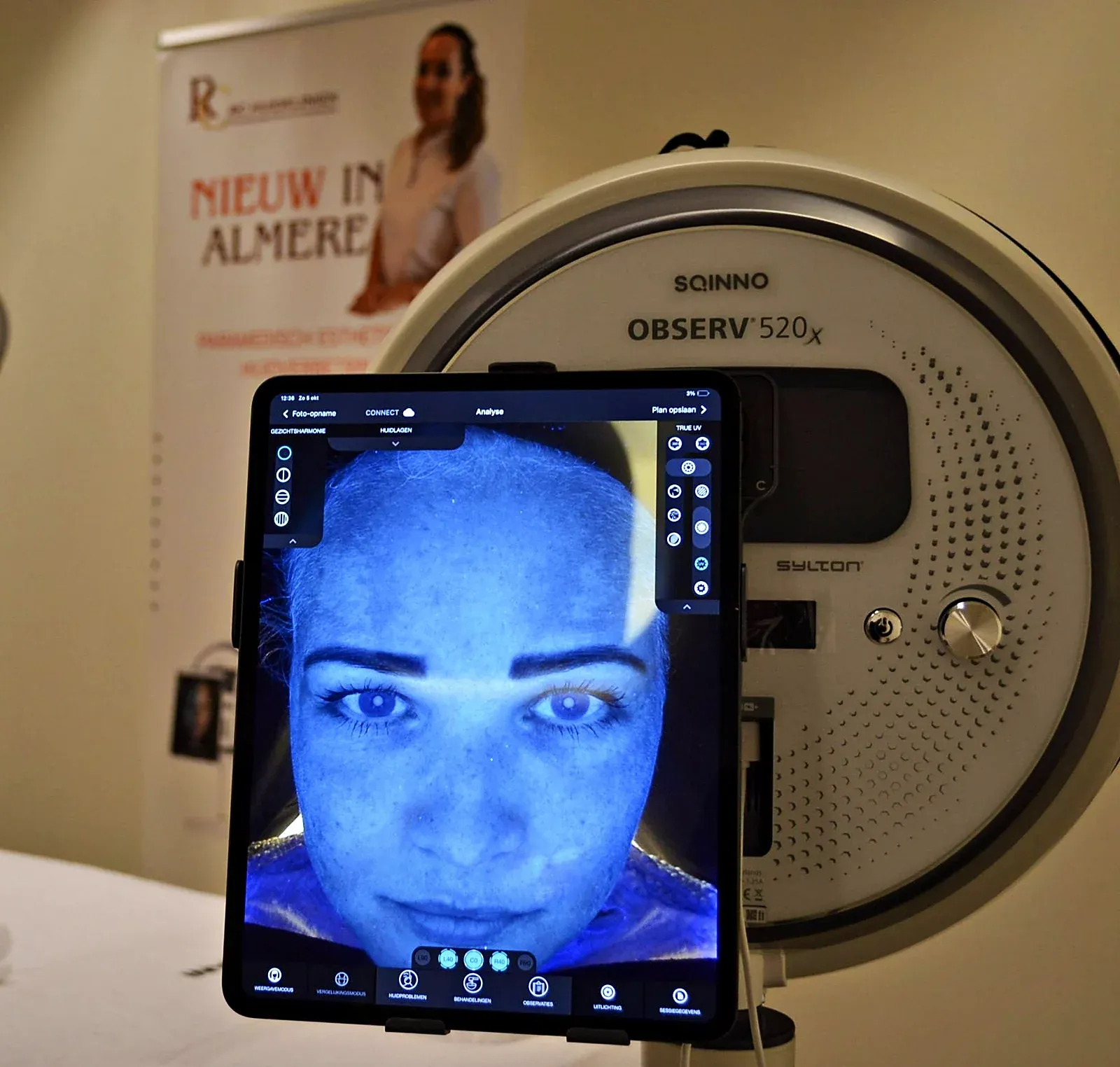
UV image of a face on the OBSERV 520x skin scanner in the treatment room
OBSERV 520x · skin analysis Different light modes reveal the distribution of pigment and signs of sun damage, including what you can’t yet see with the naked eye.

In short

  • {{k.t}}
Types of pigmentation

Not all pigmentation is the same

These six forms are the ones we see most often. They help you understand your skin, but don’t replace an assessment: many forms look alike and also occur together.

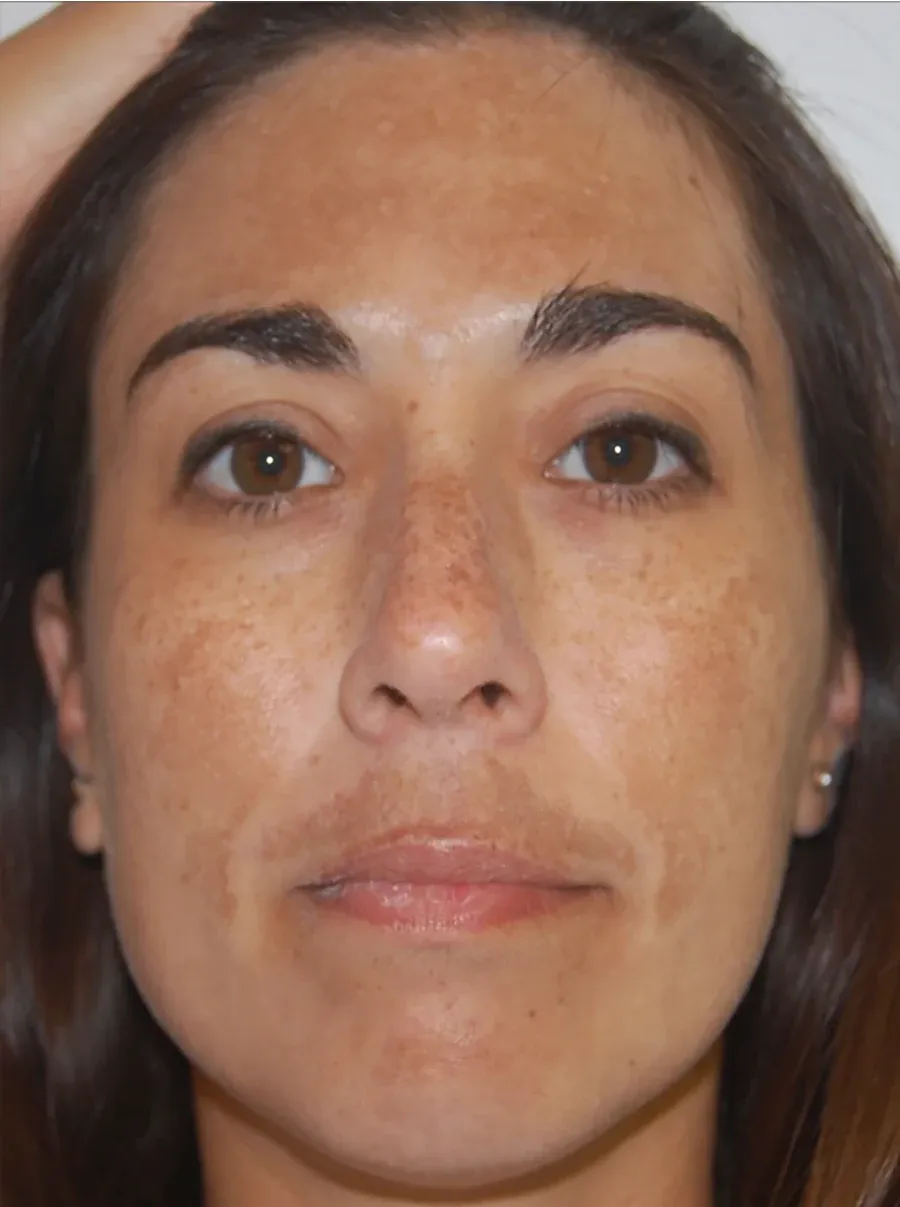
Face of a woman with scattered pigmentation spots on the forehead, cheeks and nose

{{c.name}}

{{c.look}}

{{g.t}}
Treatment direction {{c.plan}}
Please note {{c.care}}
Expectation {{c.expect}}

See a doctor first for a suspicious spot. Is a spot growing, changing shape or colour, irregular, itching or bleeding, or does it look different from your other spots? Then have it assessed by your GP or dermatologist first. If we have doubts during the skin analysis, we don’t treat and refer you on.

The science of pigmentation

The deeper the pigment, the more patience

Melanin is produced by melanocytes in the basal layer, at the bottom of the epidermis. Epidermal pigment is usually more sharply defined and brown, and generally responds better to treatment. Dermal pigment lies deeper, looks greyer or bluish and is more stubborn. Often it is a mixed form.

Where is your pigment?
Epidermis± 0.1 mm
Basal layerpigment cells
Dermis1 – 3 mm
{{depthCur.where}} {{depthCur.text}}
brown pigment, superficial grey-blue pigment, deeper Schematic, not to scale
Melanocyte
Pigment cell in the basal layer that produces melanin. Everyone has roughly the same number; the difference lies in how much melanin they produce.
Tyrosinase
The key enzyme in the production of melanin. Ingredients such as arbutin, azelaic acid and kojic acid slow it down, but don’t stop it.
Melanosome
Pigment granule in which melanin is passed on to the skin cells. Niacinamide acts on this transfer.
Our vision

Not every pigmentation needs more treatment. Sometimes the skin needs rest instead.

Every irritation is a signal for the melanocyte to produce more pigment. Especially with melasma and PIH, skin that is allowed to calm down responds better than skin that is irritated again and again. That is why we build up a treatment plan carefully: first stabilise, then regulate, and only where appropriate treat in a targeted way.

  1. IRemoveTargeted · well-definedFor suitable, clearly defined spots, such as sun spots, with laser or a suitable peel.
  2. IIRegulateSlowing productionReducing excessive pigment production and limiting triggers such as light, irritation and inflammation.
  3. IIIMaintainLimiting recurrenceA fixed routine and daily, preferably tinted, sun protection preserve the result.

Pigment cells are not switched off and pigmentation cannot be permanently stopped. You can, however, slow down production and limit the triggers of pigmentation as much as possible.

Our treatment strategy

Five steps to a more even skin

  1. {{s.n}} {{s.t}} {{s.text}}
Treatment methods

Six methods, one plan

No single method suits every form of pigmentation. We choose and combine based on your skin type, the type of pigment and what your skin tolerates.

More about the Clarity II and the OBSERV skin scan (in Dutch) →

{{t.alt}}
{{t.n}} · {{t.kind}}

{{t.name}}

{{t.text}}

Suitable for: {{t.for}}

Additional options in your treatment plan

{{x.k}} {{x.n}} {{x.t}}
Before & after

Results from our clinic

Two skin types, two treatment plans. Slide across the photos to compare before and after.

{{c.main.aa}}
{{c.main.ba}}
Before After
{{s.aa}}
{{s.ba}}
{{s.name}}

{{c.title}}

{{c.text}}

Treatment
{{c.how}}
Treatments
{{c.n}}
Period
{{c.period}}

Treatment results are individual and depend on, among other things, the type of pigmentation, skin type, choice of treatment and home care. Results may vary.

Autumn Edit · until 20 December 2026

Invest in your skin clarity

With less UV radiation in autumn and winter, your skin gets room to calm down and respond to a carefully built-up treatment plan. Daily sun protection remains important, even on grey days.

Your Autumn Edit offer Free brightening care When you start a selected pigmentation plan you receive a brightening mask or a suitable mesotherapy ampoule, tailored to your treatment plan. Valid until 20 December 2026. We agree which care product you receive during the intake.
Prices & insurance

Clear upfront, no surprises

Indicative prices, including VAT
{{p.name}}
{{p.sub}}
{{p.price}}
Put together to suit you: the final investment follows from your intake. All prices
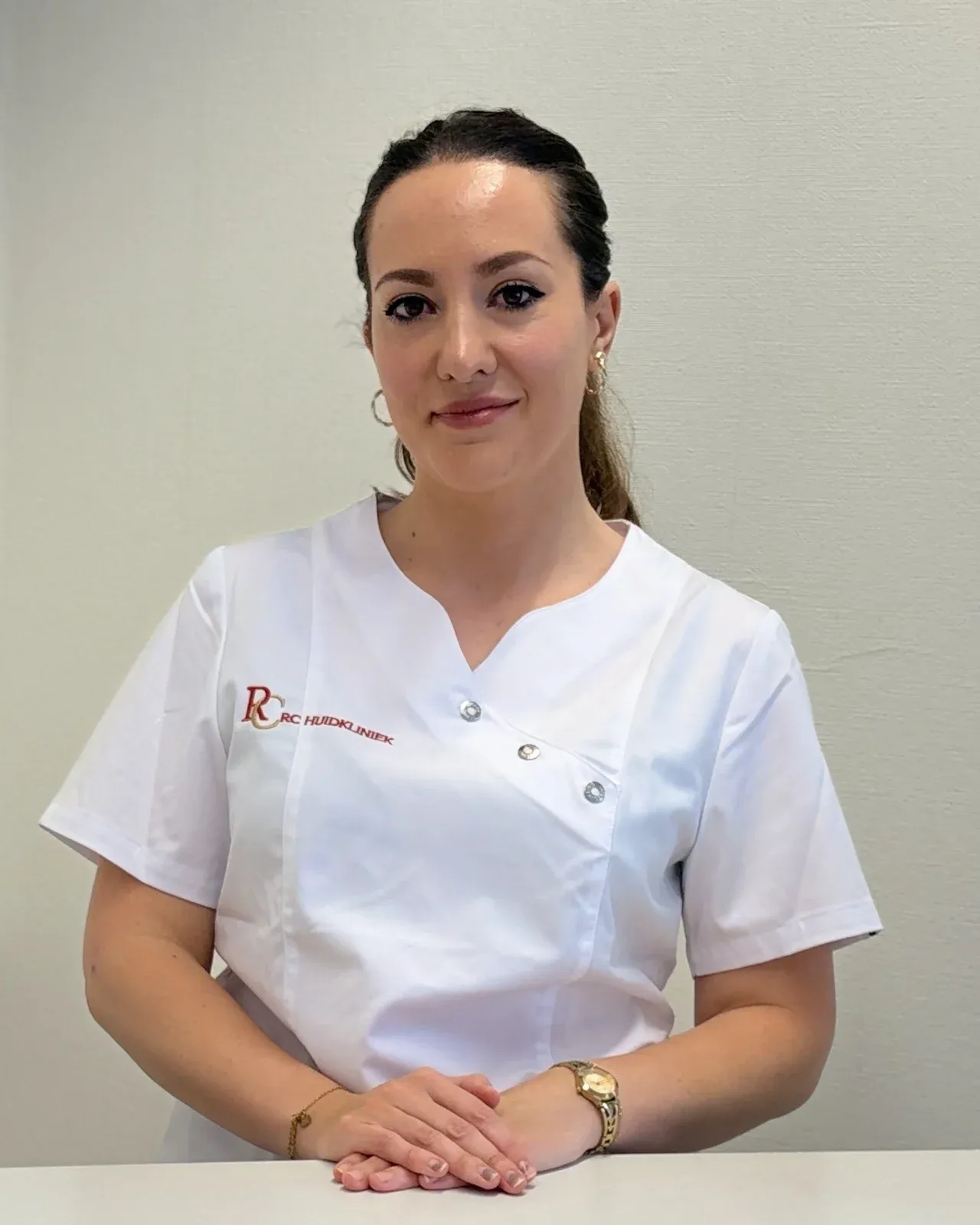
Rosa Cardoso, skin therapist (BSc), at the reception desk of RC Huidkliniek
In the right hands

Expertise, science and care

  • {{w.n}}{{w.t}} {{w.d}}

More about Rosa →

Frequently asked questions

All about pigmentation

Can’t find your question? Send us a WhatsApp

{{f.a}}

Explore further

Book your skin analysis

Start by understanding your skin

We map out your pigmentation and you get honest advice about what suits your skin, even if that advice is a referral to a doctor. No obligation.

WhatsApp
Rosa gives a client her home routine
Step {{bstepN}} of 2

What would you like to work on?

Already a client? Book your follow-up →

{{bConcernName}}: what suits you?

Intake with skin analysis

{{bConcernName}} · Free · 60 min
  • —{{e.t}}
Choose your time in the calendar → You choose your day and time in our secure booking system. Already being treated with us? Log in to book your follow-up